No Lab Required.
Clinical Grade Movement Capture
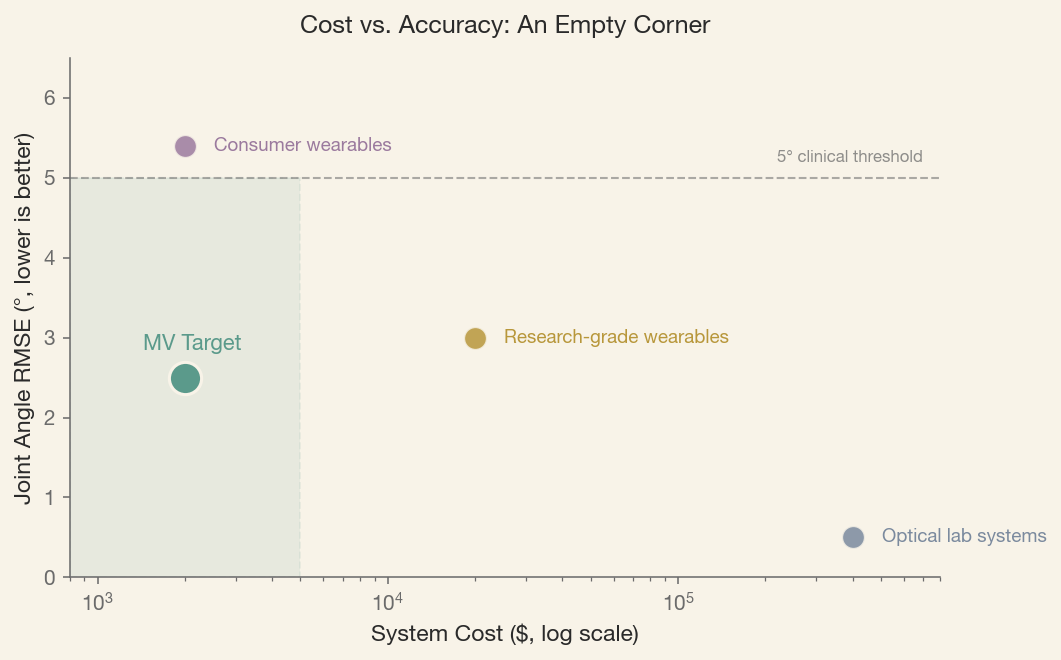
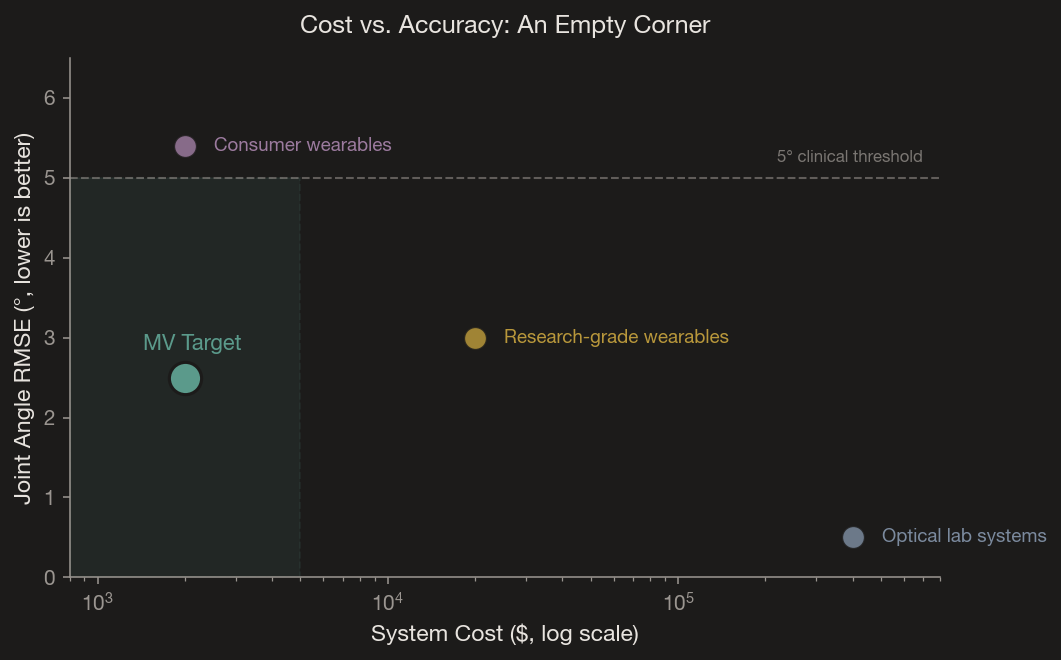
Understanding how the body moves has always required a motion-capture lab: six-figure equipment, reflective markers, expert setup, confined to four walls. It produces extraordinary data that almost no one can reach, whether you’re a clinic, an athlete, or someone just trying to move better.
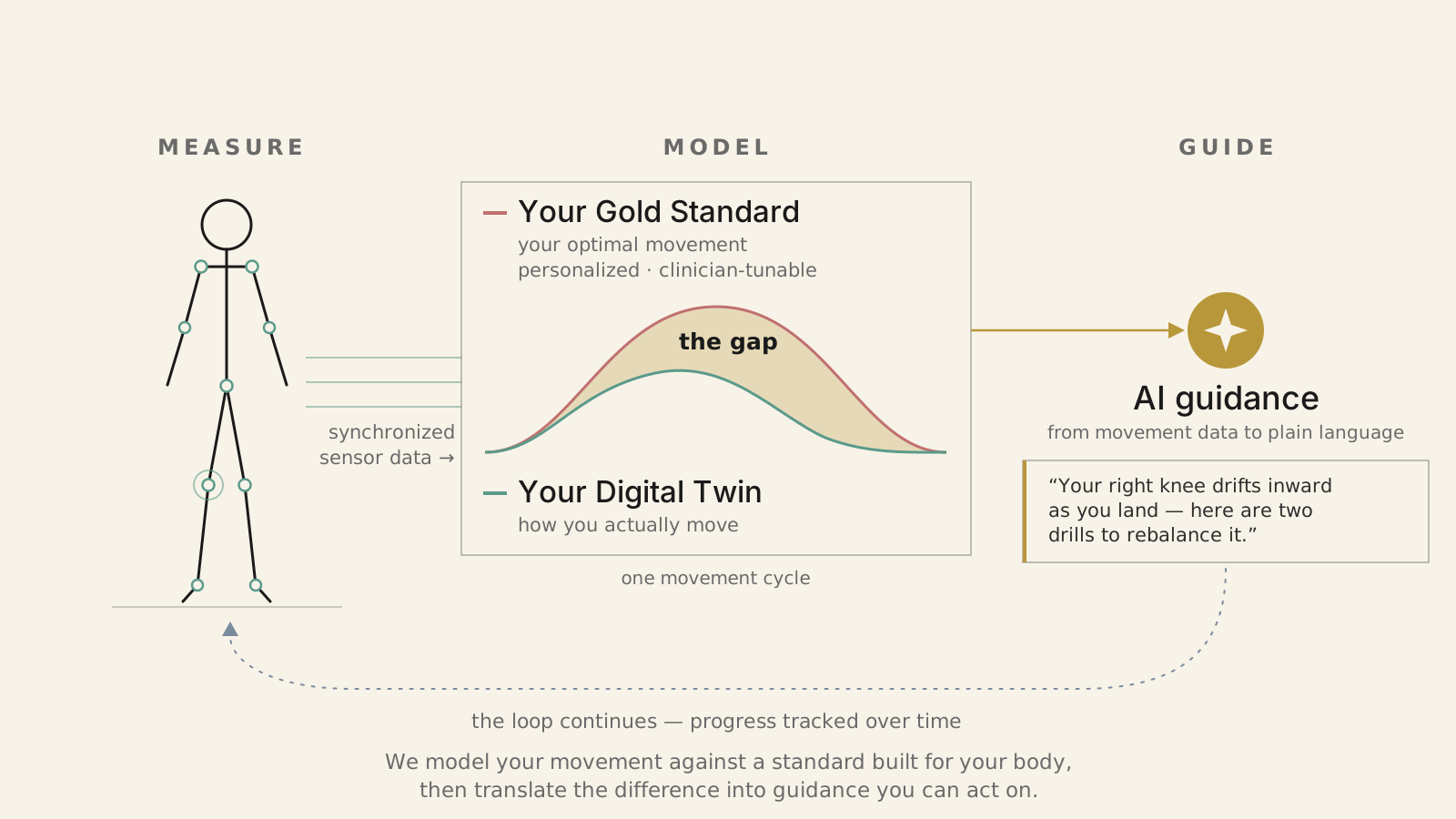
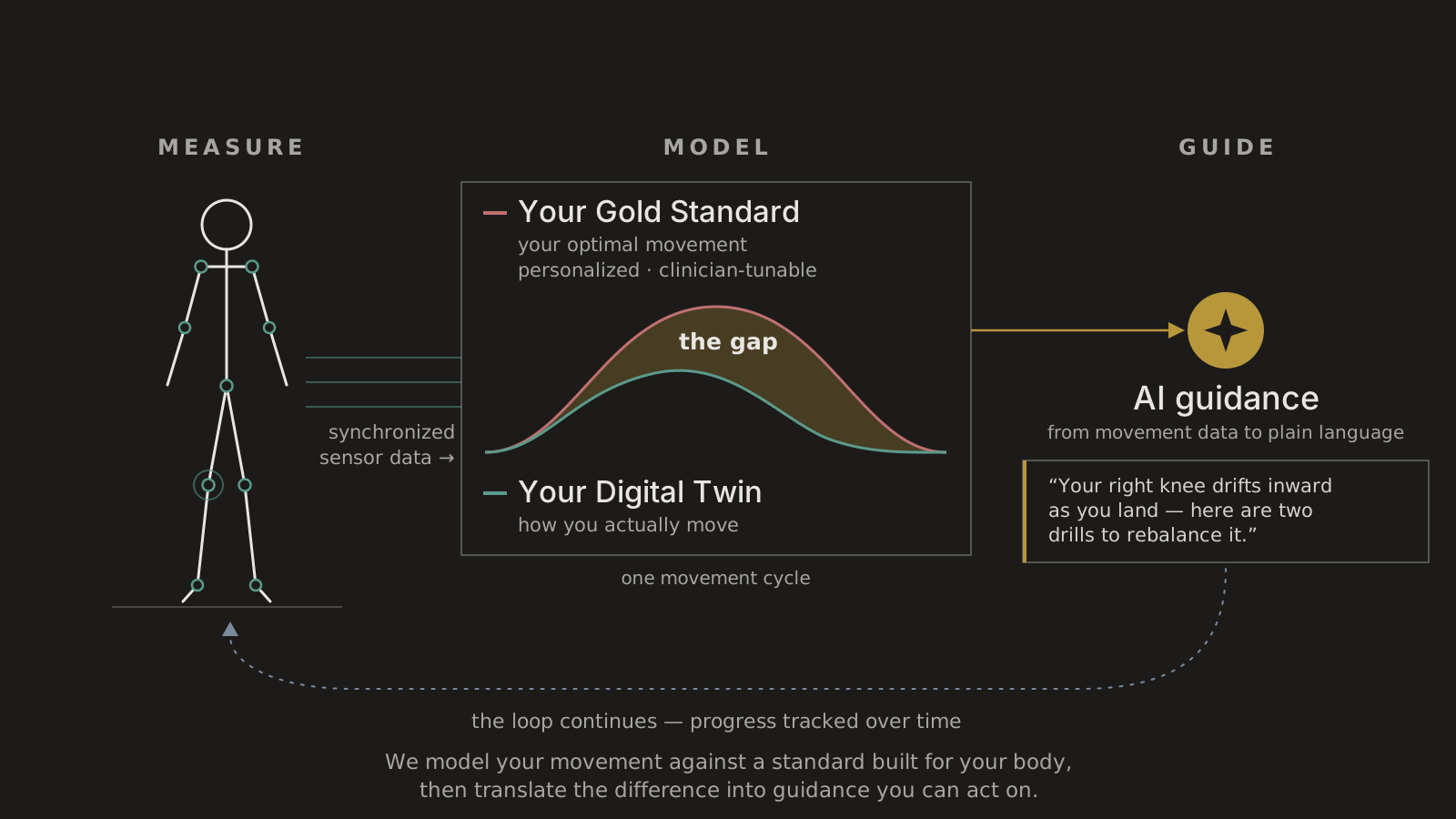
MV closes that gap. We build wearable hardware that captures clinical-grade kinematics — paired with software that models optimal movement for each individual and guides them back to it. Measure. Model. Guide. Better movement is better health.
Our Approach
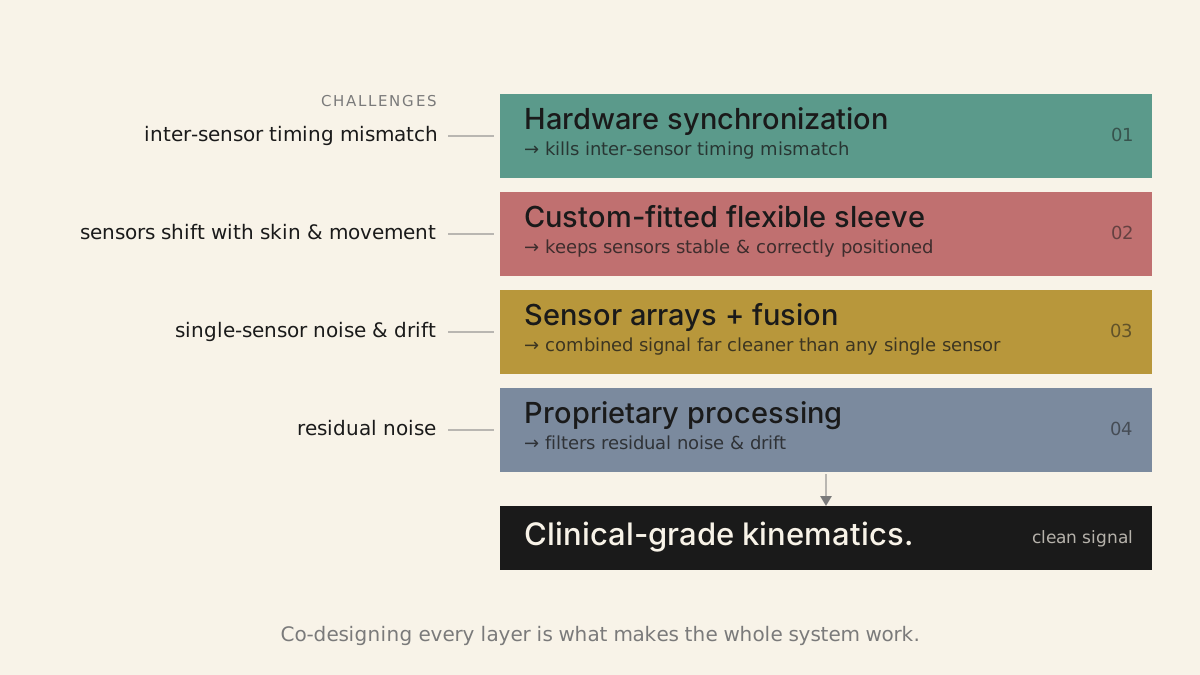
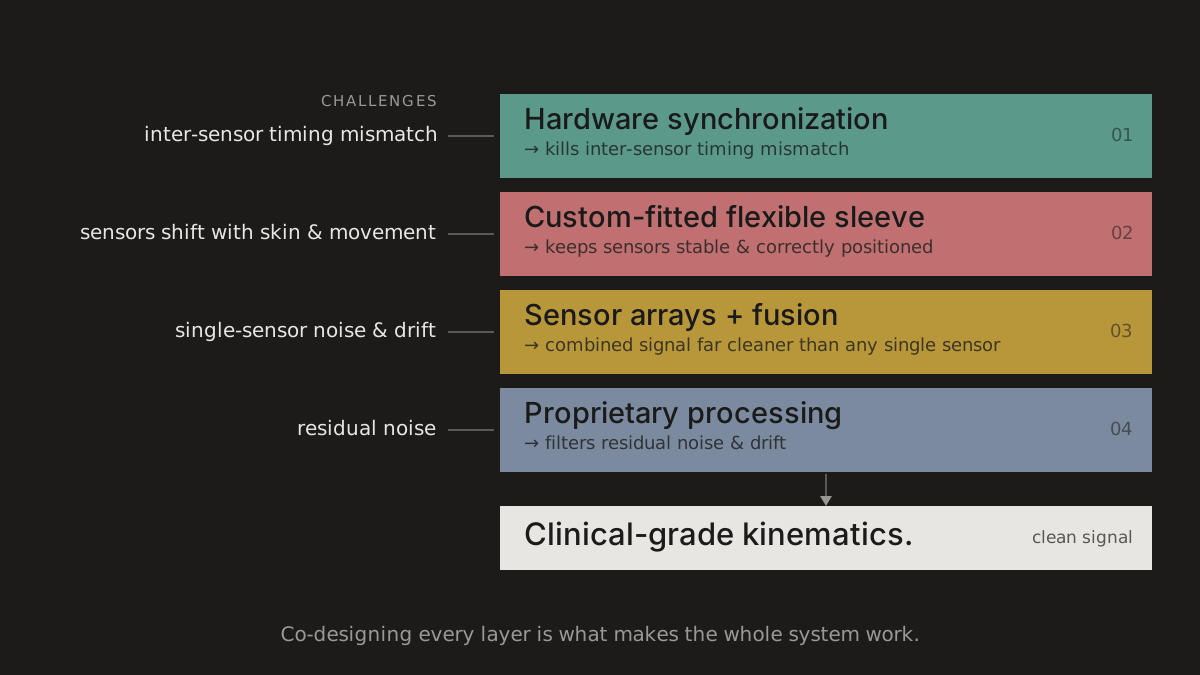
We are engineers who approached this from first principles, designing the full system from the chip through the software as one integrated whole. Synchronization was the most visible problem, but not the only one. Sensors shift with skin and movement, readings drift over time, and raw data is noisy. We address all three: a custom-fitted flexible sleeve keeps sensors stable and correctly positioned; arrays of sensors work together so their combined signal is far cleaner than any single sensor alone; and proprietary processing algorithms filter what remains. Co-designing every layer is what makes the whole system work.
Why Now
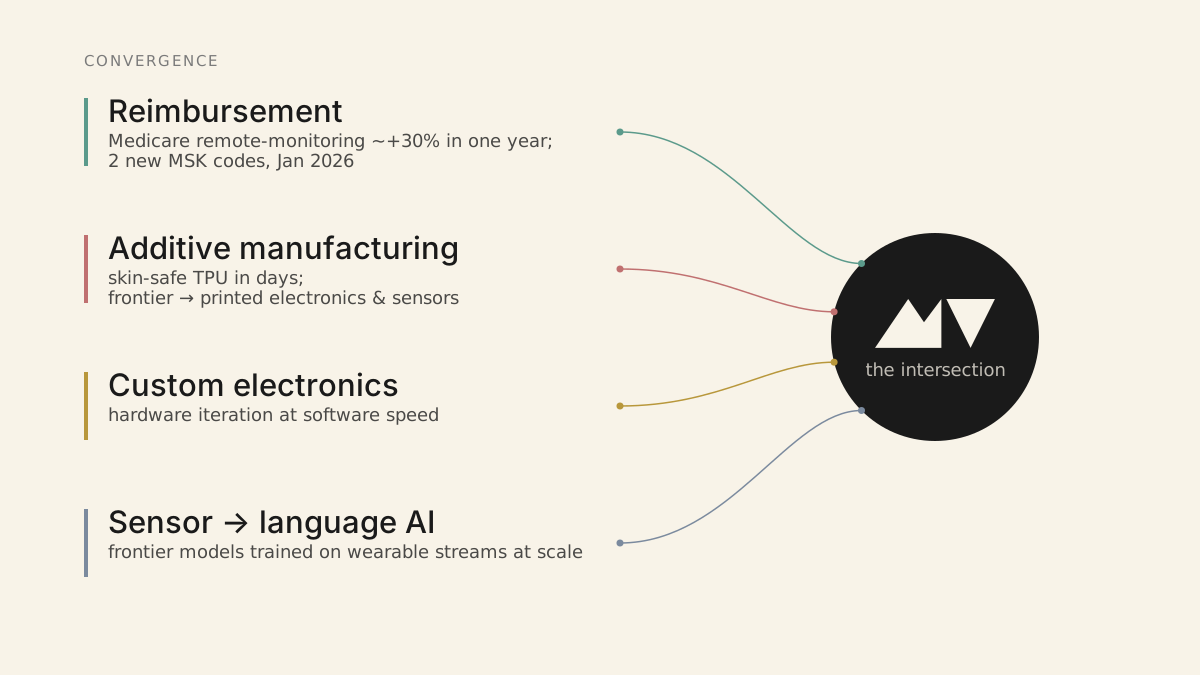
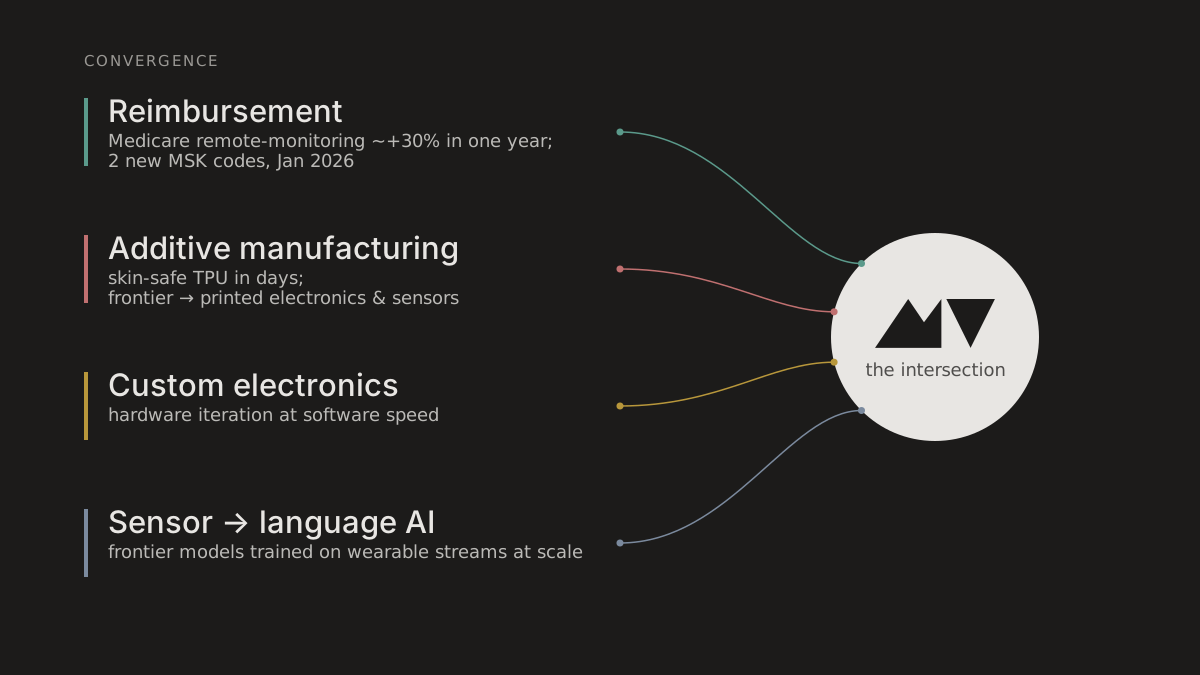
Four things converged to make this the right moment. Clinical reimbursement for remote musculoskeletal monitoring is being built right now: Medicare spending on remote monitoring grew nearly 30% in a single year, and two new MSK-specific billing codes took effect in January 2026. Advanced additive manufacturing has made patient-fitted wearables viable for a small team: skin-safe flexible materials like TPU can now be printed, iterated, and fitted in days, and the frontier is moving toward directly printing functional electronics and sensors into the structure itself. Custom electronics have followed the same curve, turning what was once a slow, expensive hardware cycle into something closer to software iteration. And the AI needed to translate raw movement data into clinical language just moved from research concept to demonstrated reality, with frontier labs training directly on wearable sensor streams at scale. MV sits at the intersection of all four.
Team
We co-design from first principles across the full stack, from silicon to firmware to biomechanics to AI.
Alexandros Zografos — Dual M.S., Bioengineering, Northeastern University & Biomechanics/Kinesiology, Aristotle University of Thessaloniki Greece
Nikolay Popov — M.S., Electrical & Computer Engineering, B.S., Human Physiology, Boston University
Valentin Jordanov — Ph.D., Nuclear Engineering, University of Michigan
What’s Next
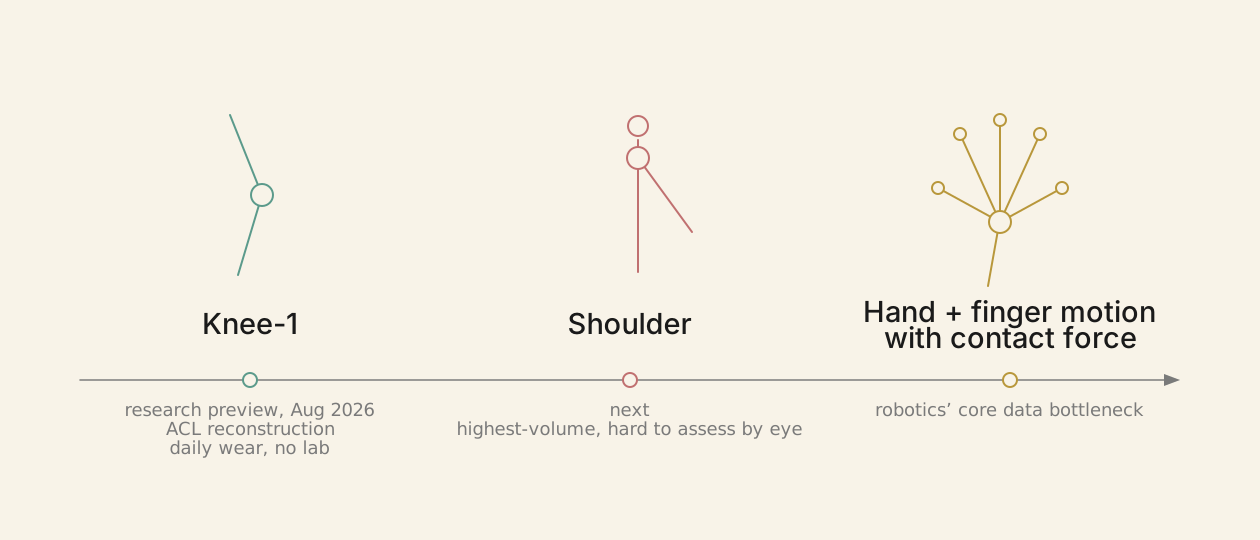
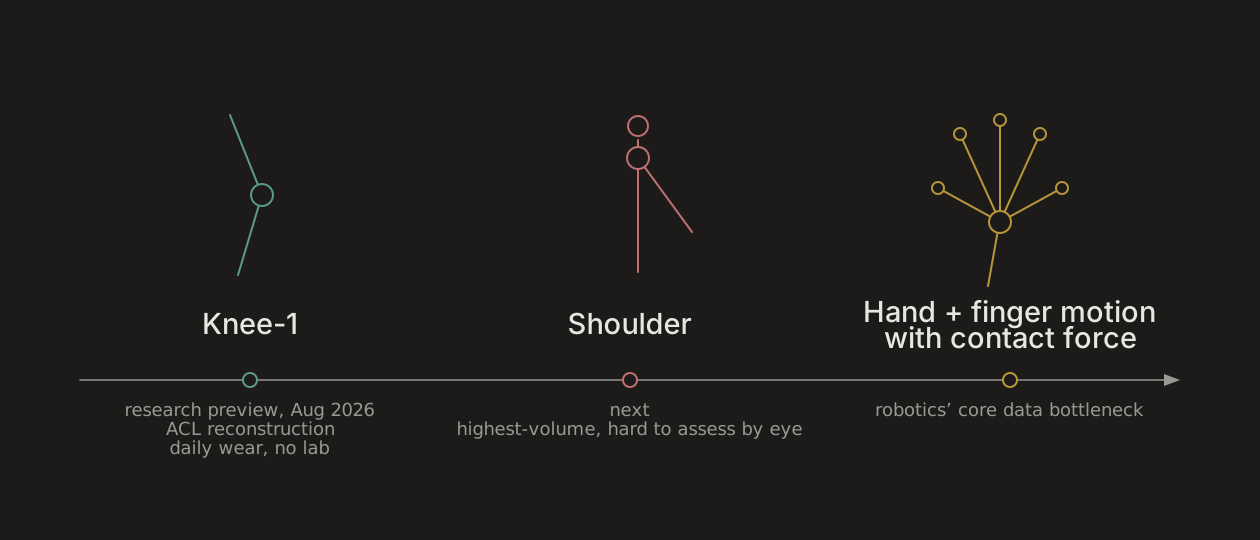
Our immediate focus is Knee-1, an instrumented knee sleeve for post-surgical recovery launching as a research preview in August 2026, starting with ACL reconstruction: objective kinematics, daily wear, no lab.
The platform extends naturally to the shoulder joint next, one of orthopedics’ highest-volume surgical categories and one of the hardest to assess by eye. Further out, the same hardware can capture dexterous hand and finger motion with contact force, data the robotics industry has identified as a core bottleneck.
We are actively seeking clinical co-development partners and research collaborators to help validate and extend the platform. We will be presenting at DOCSF, the Digital Orthopaedics Conference San Francisco, in October 2026.
Supporters
We are grateful for the support and belief of the For Knowledge Foundation.